Tuesday, January 20, 2026

Sunday, March 15, 2015
Epilogue: The Shoals of Victory
Epilogue: The Shoals of Victory
Union victory made sure that the South was completely destroyed and the Republican and the northern way of life would dominate the country.
Key Terms:
None, since this is just a summary of what happened after the Civil War ended.
Questions:
I honestly have no more questions... This gigantic book covered pretty much every thing I'll ever need to know...ever.
Citations:
- McPherson,
James M. "Epilogue: The Shoals of Victory." In Battle Cry of
Freedom, 853-862. Oxford: Oxford University Press, 1988.
- Accessed March 11, 2015. http://perfunction.typepad.com/.a/6a00d8341d896453ef010535d51455970b-500wi.
Chapter 28: We Are All Americans
Chapter 28: We Are All Americans
Abraham Lincoln followed the Union soldiers to Richmond to see it.
Meanwhile, at Appomattox Courthouse, Lee was cornered; finally, he surrendered to Grant. As the news of the surrender spread, many started cheering and shooting; Grant put a stop to it, saying that the Union was now one. He also sent rations for Lee's army.
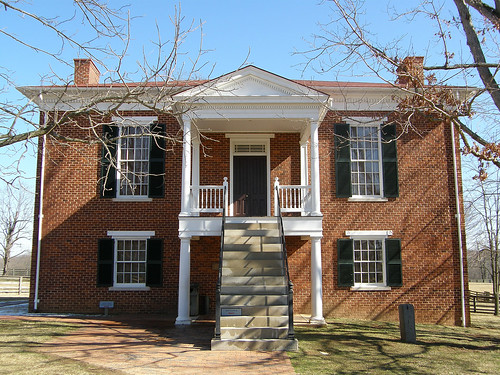 Three days later, a formal ceremony took place in which Confederate troops gave up their weapons and surrender their flags. Confederate officers and soldiers were allowed to go back home and take their horses with them.
All of these actions led to reuniting the North with the South. Lincoln promised to have a new policy for reconstructing the Union.
If you're still here, Mr. Zuber, I think I've learned everything I will ever need to know about the Civil War. 900 pages succeeded in doing that much! :)
And aww, Grant cried when Lincoln was assassinated. (I'm warming up to him XD)
Abraham Lincoln followed the Union soldiers to Richmond to see it.
Meanwhile, at Appomattox Courthouse, Lee was cornered; finally, he surrendered to Grant. As the news of the surrender spread, many started cheering and shooting; Grant put a stop to it, saying that the Union was now one. He also sent rations for Lee's army.
All of these actions led to reuniting the North with the South. Lincoln promised to have a new policy for reconstructing the Union.
If you're still here, Mr. Zuber, I think I've learned everything I will ever need to know about the Civil War. 900 pages succeeded in doing that much! :)
And aww, Grant cried when Lincoln was assassinated. (I'm warming up to him XD)
Key Terms:
- Appomattox Court House: Lee forced to totally surrender at this court house in 1865; Union treated enemy with respect and allowed Lee's men to return home to their families with their horses
- Special Field Orders, No. 15: issued by General Sherman on January 16, 1865, and said that confiscated land along the Atlantic Coast (Sea Islands) were to be settled by freed slaves and blacks; revoked by Andrew Johnson later that year.
- John Wilkes Booth: Lincoln's assassin
Questions:
- Was the pardoning of Confederates established by Lincoln or Andrew Johnson?
Citations:
- McPherson,
James M. "28: We Are All Americans." In Battle Cry of
Freedom, 831-852. Oxford: Oxford University Press, 1988.
- Accessed
March 11, 2015.
Chapter 27: South Carolina Must Be Destroyed
Chapter 27: South Carolina Must Be Destroyed
The Atlanta Campaign seemed to be over after Sherman invaded Georgia from Chattanooga, Tennessee in May 1864. After winning against Confederate Johnston, Johnston's Army of Tennessee withdrew towards Atlanta, becoming isolated from the rest of the South as Sherman cornered them. In July, President Davis replaced Johnston with the aggressive John Bell Hood.
Hood challenged the Union army through many assaults; finally, he laid a siege on Atlanta and the city fell. This would lead to Sherman's March to the Sea after the city falls. It signals the beginning of the end of the war.
During this time, the northern economy turned out butter and guns. It also had enough manpower and energy to continue westward expansion. Gold production had remained steady, new mines with copper and silver were found, and Lincoln said they had to finish the transcontinental railroad.
 New industries formed in the southern economy during the war, like gunpowder mills ordnane plants, and machine shops. The Tredegar Works in Richmond produced iron for weapons for the Confederacy. Still, the Union forces raided much of their new industries and anything of value, especially due to Sherman's March to the Sea. By the end of the war, the South was completely destroyed. Farms were burned and in need of repair, two-fifths of livestock were killed, and two-thirds of assessed southern wealth was gone during the war. After Winfield Scott's Anaconda Plan, the South continued to deteriorate.
The southern economy which was completely destroyed caused the 1860s to become the decade with the least amount of economic growth; the average income of southerners was two-thirds that of the North. After the war, the southern income continued to fall and didn't rise again for the rest of the 1800s.
The Atlanta Campaign seemed to be over after Sherman invaded Georgia from Chattanooga, Tennessee in May 1864. After winning against Confederate Johnston, Johnston's Army of Tennessee withdrew towards Atlanta, becoming isolated from the rest of the South as Sherman cornered them. In July, President Davis replaced Johnston with the aggressive John Bell Hood.
Hood challenged the Union army through many assaults; finally, he laid a siege on Atlanta and the city fell. This would lead to Sherman's March to the Sea after the city falls. It signals the beginning of the end of the war.
During this time, the northern economy turned out butter and guns. It also had enough manpower and energy to continue westward expansion. Gold production had remained steady, new mines with copper and silver were found, and Lincoln said they had to finish the transcontinental railroad.
New industries formed in the southern economy during the war, like gunpowder mills ordnane plants, and machine shops. The Tredegar Works in Richmond produced iron for weapons for the Confederacy. Still, the Union forces raided much of their new industries and anything of value, especially due to Sherman's March to the Sea. By the end of the war, the South was completely destroyed. Farms were burned and in need of repair, two-fifths of livestock were killed, and two-thirds of assessed southern wealth was gone during the war. After Winfield Scott's Anaconda Plan, the South continued to deteriorate. The southern economy which was completely destroyed caused the 1860s to become the decade with the least amount of economic growth; the average income of southerners was two-thirds that of the North. After the war, the southern income continued to fall and didn't rise again for the rest of the 1800s.
Key Terms:
- scorched earth policy: burn everything in their way; used by Sherman on his way to Atlanta in order to affect everyone (a total war); pioneered idea of hard war.
- John Bell Hood: appointed by President Davis after Johnston fails at Atlanta; he challenged the Union through many attacks and the city fell.
- Anaconda Plan: (Scott's Great Snake) strategy for subduing the seceding states by Winfield Scott
Questions:
- In what ways did the scorched earth policy affect the women and children who were left behind on the farms?
- During this time, was the South still suffering from inflation from Davis's flooding of the market with paper dollars?
Citations:
- McPherson,
James M. "27: South Carolina Must Be Destroyed." In Battle Cry of
Freedom, 807-830. Oxford: Oxford University Press, 1988.
- Accessed March 11, 2015. http://www.loc.gov/exhibits/civil-war-in-america/april-1861-april-1862/Assets/cw0011000_enlarge.jpg
Chapter 26: We Are Going To Be Wiped Off the Earth
Chapter 26: We Are Going To Be Wiped Off the Earth
After Sherman's attack and victory, newspapers praised him. Sheridan attacked the Confederates on September 18. He led them in a wave against them and his rapid-firing carbines played a role in his victory. The North was celebrating over the many victories they had now got in the past couple of months.
Meanwhile, McClellan was accepting the Democratic nomination. He was wondering how to mention what platform he was taking when his War Democrat friends convinced him that if he stopped the war with a peace treaty, that would be equal to the Union surrendering, and after what happened at Atlanta, that would be bad for his candidacy. Peace Democrats were angered that he had betrayed them. On the Republican side, Lincoln was now a victorious leader.
 Republicans also used fake and real evidence to convince the people that the Democrats were involved with rebels in Canada. Judge-Advocate General Holt released a report on the so-called Sons of Liberty and said they were working with Davis to destroy the Union. Democrats denied the report and said it was a fraud. Still, whether these were true or not is unknown, but it was a dangerous topic in Missouri. There, the "Order of American Knights" had connections with guerrilla bands. Republicans also used copperhead activities in Missouri to help their cause; Democrats fought back with racism.
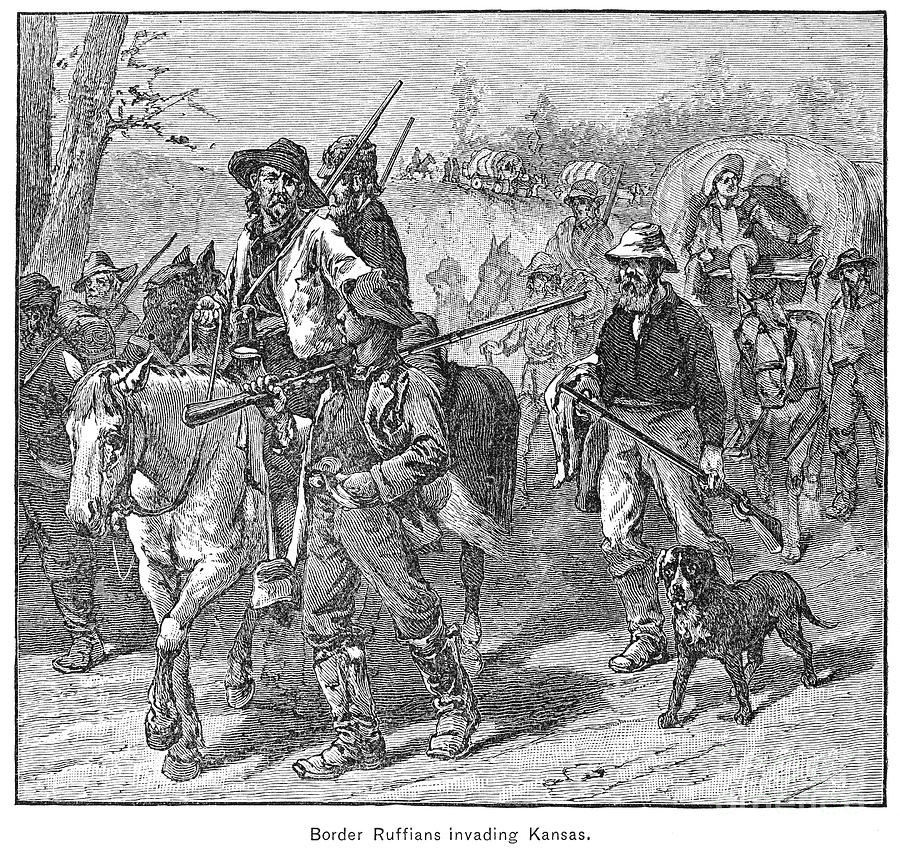
Warfare along the Kansas-Missouri border continued through 1864. The conflict between border ruffians and Jayhawkers increased more and more. Guerrilla fighting led to a form of terrorism and many were killed, land was burned, and many things were destroyed. Just like Sheridan had in the Shenandoah Valley, Jayhawkers initiated a scorched-earth policy against rebel sympathizers. Guerrilla bands in Missouri were the origin of outlaw gangs that would form after the war had ended.
Union soldiers were given the chance to vote and twelve states allowed soldier ballots to be tabulated separately. Lincoln got 78% of the votes. The Republicans swept Congress in the elections and President Lincoln was reelected for a second term.
After Sherman's attack and victory, newspapers praised him. Sheridan attacked the Confederates on September 18. He led them in a wave against them and his rapid-firing carbines played a role in his victory. The North was celebrating over the many victories they had now got in the past couple of months.
Meanwhile, McClellan was accepting the Democratic nomination. He was wondering how to mention what platform he was taking when his War Democrat friends convinced him that if he stopped the war with a peace treaty, that would be equal to the Union surrendering, and after what happened at Atlanta, that would be bad for his candidacy. Peace Democrats were angered that he had betrayed them. On the Republican side, Lincoln was now a victorious leader.
Republicans also used fake and real evidence to convince the people that the Democrats were involved with rebels in Canada. Judge-Advocate General Holt released a report on the so-called Sons of Liberty and said they were working with Davis to destroy the Union. Democrats denied the report and said it was a fraud. Still, whether these were true or not is unknown, but it was a dangerous topic in Missouri. There, the "Order of American Knights" had connections with guerrilla bands. Republicans also used copperhead activities in Missouri to help their cause; Democrats fought back with racism.Warfare along the Kansas-Missouri border continued through 1864. The conflict between border ruffians and Jayhawkers increased more and more. Guerrilla fighting led to a form of terrorism and many were killed, land was burned, and many things were destroyed. Just like Sheridan had in the Shenandoah Valley, Jayhawkers initiated a scorched-earth policy against rebel sympathizers. Guerrilla bands in Missouri were the origin of outlaw gangs that would form after the war had ended.
Union soldiers were given the chance to vote and twelve states allowed soldier ballots to be tabulated separately. Lincoln got 78% of the votes. The Republicans swept Congress in the elections and President Lincoln was reelected for a second term.
Key Terms:
- border ruffians: Southerners from Missouri who flooded Kansas to vote for it as a slave state and won; still in Missouri and fighting as tensions rose
- Jayhawkers: People in Kansas who were anti-slavery and willing to use violence; they fought at the Kansas-Missouri border with the border ruffians
Questions:
- By this time, was Missouri still a slave state and was Kansas a free state?
- Did the border ruffians and Jayhawkers actually affect politics in the east?
Citations:
- McPherson,
James M. "26: We Are Going To Be Wiped Off the Earth." In Battle Cry of
Freedom, 774-806. Oxford: Oxford University Press, 1988.
- Accessed March 11, 2015. http://images.fineartamerica.com/images-medium-large/2-kansas-border-ruffians-granger.jpg.
Chapter 25: After Four Years of Failure
Chapter 25: After Four Years of Failure
After Grant and Sherman's campaign, Atlanta became a symbol of resistance and nationality. Still, in Richmond, the cabinet worried, believing Atlanta was lost to them. Grant's siege of Petersburg was not very successful and northerners began to feel the weight of the war at last. Still, it led to a stalemate between Lee and Grant; finally, Grant forced the Confederate army to abandon Petersburg and Richmond, and then pursued them after isolating them from the South. Finaly, Lee surrendered.
 From July and August of 1861, the northern morale plummeted again. Many of the homefront war songs that had become popular during the time shifted from a patriotic tone to a longing for peace, just like the Confederates had hoped would happen. "When This Cruel War Is Over" became a best-seller in 1864.
Nothing, it seemed, could remove the Northern depression. Even after David Farragut made sure to take the last blockade-running port in the Gulf (east of Texas) out of business, people were still depressed. Later, they realized how amazing it had been as the war still continued in Virginia and Georgia.
Some Southerners tried to get Peace Democrats into a war against their own government. This never happened, since the leaders of the Peace Democrats could never mobilize their people. Most of them didn't want to create a counterrevolution since they believed their chances of overthrowing Lincoln were getting better.
Many accused Lincoln of fighting only for the abolition of slavery and not for the Union, which he vehemently denied. He almost gave in to demands that they should ignore abolition in sake of peace. But, his peace terms remained as the Union and emancipation and believed that he would be defeated because of his platform. He expected McClellan to win since he was the most popular Democrat and was a symbol of opposition against Lincoln's policies. Still, McClellan was a War Democrat and many no longer wanted to support him, even though he said that he would still call for a peace treaty.
When Atlanta was finally taken, Lincoln said that the war was a victory.
After Grant and Sherman's campaign, Atlanta became a symbol of resistance and nationality. Still, in Richmond, the cabinet worried, believing Atlanta was lost to them. Grant's siege of Petersburg was not very successful and northerners began to feel the weight of the war at last. Still, it led to a stalemate between Lee and Grant; finally, Grant forced the Confederate army to abandon Petersburg and Richmond, and then pursued them after isolating them from the South. Finaly, Lee surrendered.
From July and August of 1861, the northern morale plummeted again. Many of the homefront war songs that had become popular during the time shifted from a patriotic tone to a longing for peace, just like the Confederates had hoped would happen. "When This Cruel War Is Over" became a best-seller in 1864.Nothing, it seemed, could remove the Northern depression. Even after David Farragut made sure to take the last blockade-running port in the Gulf (east of Texas) out of business, people were still depressed. Later, they realized how amazing it had been as the war still continued in Virginia and Georgia.
Some Southerners tried to get Peace Democrats into a war against their own government. This never happened, since the leaders of the Peace Democrats could never mobilize their people. Most of them didn't want to create a counterrevolution since they believed their chances of overthrowing Lincoln were getting better.
Many accused Lincoln of fighting only for the abolition of slavery and not for the Union, which he vehemently denied. He almost gave in to demands that they should ignore abolition in sake of peace. But, his peace terms remained as the Union and emancipation and believed that he would be defeated because of his platform. He expected McClellan to win since he was the most popular Democrat and was a symbol of opposition against Lincoln's policies. Still, McClellan was a War Democrat and many no longer wanted to support him, even though he said that he would still call for a peace treaty.
When Atlanta was finally taken, Lincoln said that the war was a victory.
Key Terms:
- Battle of Petersburg: stalemate between Lee and Grant; Grant forced Confederates to abandon Petersburg and Richmond; pursued them by cutting off their line of retreat to the South; Lee surrendered.
- "When This Cruel War Is Over": a homefront war song that shows the shift from patriotism to a longing for peace in the North as morale dropped.
- Horace Greeley: An American editor of a leading newspaper, a founder of the Republican party, reformer and politician He helped support reform movements and anti-slavery efforts through his New York Tribune newspaper
Questions:
- What impact did social media (newspapers, telegraphs) have on shaping public opinion about the war?
- Did Peace Democrats support McClellan after his statement that he would still seek out a peace treaty with the Confederates?
Citations:
- McPherson,
James M. "25: After Four Years of Failure." In Battle Cry of
Freedom, 751-773. Oxford: Oxford University Press, 1988.
- Accessed March 11, 2015. http://upload.wikimedia.org/wikipedia/commons/3/35/Petersburg_Aug18-19.png.
Chapter 24: If It Takes All Summer
Chapter 24: If It Takes All Summer
In 1864, the Union seemed to be doing very well and it looked like the Confederacy was about to come to an end. They didn't have much food, had few people left for their armies, and had less than half of the numbers the Union had. Still, the Union had its flaws. Because of all its success, it had to use many armies to watch over conquered territory, thus dropping defenses.
 The Army of the Northern Virginia still seemed to want to continue fighting; in the Union, many veterans were supposed to go home, but Congress forced those veterans to re-enlist. Still, there was a lot of disunity between veteran soldiers and the new recruits and the apparent superiority the North had in numbers disappeared in 1864.
The Confederacy hoped to use these problems to their advantage. If they could wait until the 1864 election, the North may become tired of the war and vote in a Peace Democrat who could negotiate Confederate independence. They had many casualties, but the Union had even more.
Grant attempted to bring Lee into open-field combat, but failed; despite his large numbers and huge quantity in gunpowder, Lee was able to defend against Grant. This could have scared northern voters into not allowing Lincoln a second term, McPherson claims. Thus, Grant took all summer to finish it off. After seven weeks, at the Wilderness, it fought and many were killed. Still, they killed a similar percentage on Lee's army and cut off his communication with the rest of the Confederacy. Thus, the Army of Northern Virginia slowly declined in fame and Lee was defeated.
Sherman decided to fight for Atlanta. When he began his campaign in Atlanta, he ordered a garrison commander to find Forrest and fight him so that he wouldn't cut the railroad. Still, they lost and it was one of the worst Union defeats in the west, but it diverted Forrest from the Tennessee railroad. He didn't inflict as many casualties hoped and the Unions believed the south was now in good spirits.
In 1864, the Union seemed to be doing very well and it looked like the Confederacy was about to come to an end. They didn't have much food, had few people left for their armies, and had less than half of the numbers the Union had. Still, the Union had its flaws. Because of all its success, it had to use many armies to watch over conquered territory, thus dropping defenses.
The Army of the Northern Virginia still seemed to want to continue fighting; in the Union, many veterans were supposed to go home, but Congress forced those veterans to re-enlist. Still, there was a lot of disunity between veteran soldiers and the new recruits and the apparent superiority the North had in numbers disappeared in 1864. The Confederacy hoped to use these problems to their advantage. If they could wait until the 1864 election, the North may become tired of the war and vote in a Peace Democrat who could negotiate Confederate independence. They had many casualties, but the Union had even more.
Grant attempted to bring Lee into open-field combat, but failed; despite his large numbers and huge quantity in gunpowder, Lee was able to defend against Grant. This could have scared northern voters into not allowing Lincoln a second term, McPherson claims. Thus, Grant took all summer to finish it off. After seven weeks, at the Wilderness, it fought and many were killed. Still, they killed a similar percentage on Lee's army and cut off his communication with the rest of the Confederacy. Thus, the Army of Northern Virginia slowly declined in fame and Lee was defeated.
Sherman decided to fight for Atlanta. When he began his campaign in Atlanta, he ordered a garrison commander to find Forrest and fight him so that he wouldn't cut the railroad. Still, they lost and it was one of the worst Union defeats in the west, but it diverted Forrest from the Tennessee railroad. He didn't inflict as many casualties hoped and the Unions believed the south was now in good spirits.
Key Terms:
- Army of the Northern Virginia: Lee was Confederate General; its first mission was to defend Richmond (Confederate capital) and then defeat the Army of the Potomac.
- March to the Sea: Sherman's march from Atlanta to South Carolina; hard war; scorched earth policy that led to a lot of damage for the South
- William Sherman: general who succeeded at Vicksburg and Atlanta, and completed the March to the Sea; was able to capture Johnston and his army
Questions:
- In what ways did the Southerners suffer from after William Sherman's March to the Sea?
- Was the scorched earth policy just a burning of the land so that no one could use it or was there other reason as to why Sherman did this?
Citations:
- McPherson,
James M. "24: If It Takes All Summer." In Battle Cry of
Freedom, 718-750. Oxford: Oxford University Press, 1988.
- Accessed March 11, 2015. http://web3.encyclopediavirginia.org/resourcespace/filestore/3/7/4_6a6f284a413a8e7/374scr_f69b5054fe7f302.jpg.
Subscribe to:
Comments (Atom)